Home About Services Platform Technology Crop Potential How It Works Demo Farm Contact Book Farm Analysis
Our Technology · 20+ Scientific Indices

The Science Behind
Precision Farming

Twenty-plus remote sensing indices, multi-source data integration, and the soil and crop science behind every yield we promise. We turn satellite, drone, soil and field data into one complete digital picture of your farm.

NDVI NDMI NDRE EVI GDD ETc Soil pH EC N-P-K LiDAR DEM Hydraulics
View the formulas and equations we use
Satellite data visualization for precision agriculture
20 Scientific Indices
5+ Data Sources
4 Predictive Models
98% Analysis Accuracy

Satellite Data Indices We Analyze

NDVI

Normalized Difference Vegetation Index

Measures crop health & chlorophyll activity

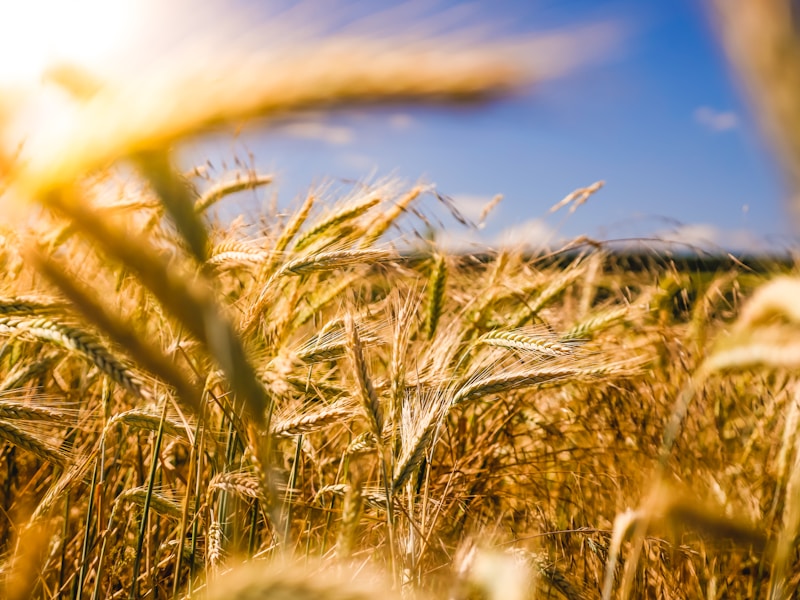
NDVI analyzes near-infrared light reflected by vegetation to quantify photosynthetic activity. Healthy crops absorb more visible light and reflect more NIR, producing higher NDVI values (0.6-0.9). Stressed or diseased areas show lower readings, enabling early intervention.
Early Disease Detection Growth Monitoring
Learn More
NDWI

Normalized Difference Water Index

Detects water stress in crops

NDWI uses green and NIR bands to assess water content in vegetation canopy. It detects dehydration stress before wilting becomes visible, enabling proactive irrigation adjustments. Critical for arid and semi-arid farming regions.

Water Stress Alerts Irrigation Timing
Learn More
SMI

Soil Moisture Index

Optimizes irrigation planning

Satellite-derived soil moisture measurements at 10-30cm depth provide field-wide moisture mapping. This eliminates guesswork in irrigation scheduling, ensuring each zone receives exactly the water it needs, no more, no less.
Zone-level Irrigation Water Conservation
Learn More
LST

Land Surface Temperature

Monitors heat stress & growth conditions

Thermal satellite bands measure surface temperature variations across the farm. Temperature anomalies indicate irrigation deficiencies, canopy gaps, or disease hotspots. Critical for predicting heat stress events and optimizing planting windows.

Heat Stress Alerts Planting Optimization
Learn More
WX

Weather Analytics Layer

Satellite + ground weather fusion for pest & yield models

Integrates satellite atmospheric data (Sentinel-5P, MODIS, GOES) with ground weather stations and reanalysis (ERA5) into a unified hyperlocal forecast layer. Feeds pest outbreak predictions, spray windows, and yield models with 14-day horizon.

Pest Forecasting Yield Prediction
Learn More

Advanced Crop Science Indices

Beyond remote sensing, we track biophysical, atmospheric, and phenological parameters that drive precision interventions at every growth stage.

VPD

Vapour Pressure Deficit

Controls transpiration & stomatal behavior

VPD quantifies the drying power of air, the difference between saturated and actual water vapor pressure. Optimal VPD (0.8–1.2 kPa) maximizes photosynthesis; too high forces stomatal closure, halting growth.

Transpiration Control Stomatal Regulation
Learn More
PPFD

Photosynthetic Photon Flux Density

Satellite-derived PAR for photosynthesis potential

PPFD measures photosynthetically active photons (400–700nm) reaching the canopy. Derived from satellite solar radiation products (CERES, MODIS, Sentinel-3 OLCI) using the relationship PAR ≈ 0.45 × Rs, then converting to μmol/m²/s via the 4.57 μmol/J factor.

Light Optimization Polyhouse Control
Learn More
GDD

Growing Degree Days

Predicts crop phenological stages

GDD accumulates thermal units above a base temperature to predict crop development stages, germination, flowering, and maturity. Essential for scheduling irrigation, fertilization, and harvest with precision.

Growth Stage Prediction Harvest Timing
Learn More
ET

Evapotranspiration

Quantifies total crop water demand

ET combines soil evaporation and plant transpiration to measure actual water loss. The Penman-Monteith equation calculates reference ET (ET₀), then crop coefficients (Kc) scale it per crop and growth stage.

Irrigation Scheduling Water Budget
Learn More
LAI

Leaf Area Index

Measures canopy density & light interception

LAI is the total one-sided leaf area per unit ground area. LAI of 3–5 indicates optimal canopy closure; below 2 means poor coverage and wasted light; above 6 risks self-shading and fungal conditions.

Canopy Assessment Biomass Estimation
Learn More
fAPAR

Fraction of Absorbed PAR

Measures photosynthetic efficiency of canopy

fAPAR is the fraction of incoming photosynthetically active radiation (PAR) absorbed by the vegetation canopy. Directly proportional to net primary productivity (NPP) and used in yield estimation models.

Yield Estimation Carbon Sequestration
Learn More
CTD

Canopy Temperature Depression

Detects water stress via thermal imaging

CTD measures the difference between air temperature and canopy temperature. Well-watered crops are cooler than air (CTD > 0); water-stressed crops become warmer, signaling immediate irrigation need.

Drought Stress Thermal Mapping
Learn More
CHI

Canopy Health Index

Composite score of overall crop vigor

Our proprietary CHI combines NDVI, LAI, CCI (Chlorophyll Content Index from Sentinel-2 Red Edge bands), and canopy temperature into a single 0–100 health score per zone.

Health Scoring Zone Comparison
Learn More
PDI

Pest Risk Model

ML-driven pest outbreak probability score

Our pest risk model combines real-time weather data (T, RH, rainfall), crop stress indicators (NDVI decline), growth stage (GDD), and historical outbreak records to output a 0–100% risk score for 12+ pests.

Outbreak Prediction Spray Scheduling
Learn More

Real-Time Weather & Atmospheric Data

Continuous environmental monitoring from meteorological satellites and hyperlocal weather APIs (IMD, ECMWF), feeding live data into every farming decision — no field hardware required.

RH

Relative Humidity

Drives disease risk & transpiration rate

RH above 85% creates ideal conditions for fungal pathogens like blast, blight, and mildew. Below 40%, plants face excessive transpiration stress. We track RH at canopy level every 15 minutes.

Disease Prediction Spray Timing
Learn More
TEMP

Air Temperature

Controls growth rate & enzyme activity

Every crop has cardinal temperatures, base, optimum, and ceiling. Rice optimum: 25–30°C. Coconut: 27–32°C. We track min/max/mean daily temperatures for GDD calculation and heat stress alerts.

Growth Modeling Heat Stress Alerts
Learn More
RAIN

Rainfall & Precipitation

Water budget & flood/drought assessment

Satellite rain estimates (GPM/IMERG) combined with ground rain gauges deliver sub-hourly rainfall data. Used for irrigation offset calculation, waterlogging risk, and dry spell detection.

Irrigation Offset Flood Warning
Learn More
WIND

Wind Speed & Direction

Spray efficacy & ET calculation input

Wind > 15 km/h causes spray drift, wasting chemicals and causing crop damage. Wind is a key input to the Penman-Monteith ET equation. We provide 10-min wind rose data for spray window optimization.

Spray Optimization ET Calculation
Learn More
RAD

Solar Radiation

Energy input for photosynthesis & ET

Net solar radiation (Rn) is the primary energy driver for both photosynthesis and evapotranspiration. Measured in MJ/m²/day, it determines maximum possible crop growth rate and water demand per day.

Growth Energy ET Driver
Learn More
DEW

Dew Point Temperature

Condensation risk & fungal disease trigger

When air temperature approaches the dew point, moisture condenses on leaf surfaces, creating ideal conditions for fungal spore germination. Dew point alerts trigger preventive fungicide scheduling 24–48 hours ahead.

Fungal Risk Alert Condensation Forecast
Learn More

How These Indices Combine

No single index tells the full story. Our analytics engine fuses all 20+ data streams into actionable farm decisions, every hour, every zone.

Irrigation Decisions

ET + SMI + NDWI + Rainfall + VPD combine to output exact liters per zone, timed to avoid peak evaporation.

Fertilizer Timing

NDVI + LAI + GDD + soil test feed variable-rate prescriptions, nitrogen at flowering, potassium at grain fill.

Pest & Disease Alerts

RH + Dew Point + Temp + NDVI anomalies + historical outbreak data feed our ML pest risk model with 14-day forward prediction.

Yield Forecast

fAPAR + LAI + GDD accumulation + solar radiation + weather forecast combine in our yield model, 85-92% accurate from flowering.


The Science That
Drives Every Yield

Understand the foundational science behind modern farming, soil chemistry, farming philosophies, and why precision agriculture is the evolution every farm needs.

Soil sample in hands for pH analysis
pH Soil + Water

What is pH?

pH measures the concentration of hydrogen ions on a logarithmic scale from 0–14. In farming, two pH values matter: soil pH (controls nutrient availability) and irrigation water pH (affects soil chemistry over time and fertilizer efficiency). Managing both is essential for sustained productivity.

Acidic
Optimal 6.0–7.5
Alkaline
024678101214
🌱

Soil pH

Measured in 1:2 soil-water extract
Optimal: 6.0–7.5
  • Below 5.5: P locked in Al/Fe complexes, toxicity risk
  • 6.0–7.0: 95% nutrient uptake efficiency
  • Above 7.5: Zn, Fe, Mn micronutrients unavailable
💧

Water pH

Measured at source / irrigation line
Optimal: 5.5–7.0
  • Below 5.5: Corrodes drip lines, damages pumps
  • 6.0–7.0: Maximum fertilizer solubility in fertigation
  • Above 8.0: CaCO₃ precipitates, clogs emitters

Impact on Farming

Nutrient Availability (Soil)

At soil pH < 5.5, phosphorus gets locked in aluminum/iron complexes. At pH > 7.5, micronutrients (Zn, Fe, Mn) become unavailable. 95% of nutrient uptake happens at pH 6.0–7.0.

🦠
Microbial Activity (Soil)

Nitrogen-fixing bacteria (Rhizobium, Azotobacter) thrive at pH 6.5–7.5. Acidic soils favor fungi over bacteria, slowing organic matter decomposition.

💧
Fertigation Efficiency (Water)

Alkaline irrigation water (pH > 7.5) reduces urea and NPK solubility, causing precipitation in drip lines. Acidic water (pH < 5) dissolves pesticide actives too fast, reducing efficacy.

🚰
Long-term Soil Drift (Water→Soil)

Irrigating with alkaline water (pH > 8) over 5–10 years raises soil pH by 0.5–1.0 unit, causing gradual yield decline even on originally optimal fields.

Crop-Specific Optimal Soil pH

Rice5.5–6.5
Coconut5.2–6.8
Sugarcane6.0–7.5
Wheat6.0–7.0
Vegetables6.0–7.0
Cotton5.8–8.0
pH Correction Methods
⬆ Raise Soil pH Agricultural lime (CaCO₃), 2–4 tonnes/ha for acidic soils
⬇ Lower Soil pH Elemental sulfur or gypsum, 500kg–1 tonne/ha for alkaline soils
⬇ Lower Water pH Inject phosphoric/sulfuric acid in drip line, target pH 5.5–6.5
⬆ Raise Water pH Potassium bicarbonate or baking soda, rare, usually not needed
Laboratory beakers for EC and water testing
EC Soil + Water

What is EC?

Electrical Conductivity (EC) measures the concentration of dissolved salts in a solution, expressed in deciSiemens per meter (dS/m). In farming, two EC values are critical: soil EC (current salinity in root zone) and irrigation water EC (salts added with every irrigation). High water EC over time causes soil salinization, the #1 cause of farm abandonment.

Soil EC Zones (dS/m)
0–0.8
Low fertility
0.8–2.0
Optimal
2.0–4.0
Moderate
4.0–8.0
Saline
>8.0
Severe
🌱

Soil EC

Root zone salinity (1:2 extract)
Optimal: 0.8–2.0 dS/m
  • < 0.8: Low fertility, poor nutrient availability
  • 0.8–2.0: Ideal nutrient concentration for uptake
  • 2.0–4.0: Moderate stress, sensitive crops affected
  • > 4.0: Severe osmotic stress, yield drops 10%/dS/m
💧

Water EC

Irrigation water salinity
Optimal: < 0.7 dS/m
  • < 0.7: Excellent, no restrictions on crop choice
  • 0.7–3.0: Moderate, requires leaching + tolerant crops
  • > 3.0: Severe, limited to halophytes, saline-tolerant
  • Every 1 dS/m water EC adds ~0.4 dS/m to soil per season

Impact on Farming

💧
Osmotic Stress (Soil)

High soil EC creates osmotic pressure preventing root water uptake, causing drought symptoms even in wet soil. Every 1 dS/m above threshold reduces yield by ~10%.

🔬
Nutrient Balance (Soil)

Excess Na⁺ displaces Ca²⁺ and K⁺ in soil, disrupting nutrient uptake. High chloride toxicity damages leaf edges and stunts growth.

🚰
Soil Salinization (Water→Soil)

Irrigating with high-EC water (>2.0 dS/m) for 3–5 seasons without leaching can raise soil EC by 2–4 dS/m, permanently reducing farm productivity.

🌾
Germination Failure

Soil EC > 4 dS/m reduces germination by 40–60%. Salt-sensitive crops (beans, onions, strawberry) fail completely in saline conditions.

Crop Soil Salinity Tolerance

Beans< 1.0 dS/m
Rice2.0–3.0
Wheat6.0–8.0
Coconut3.0–4.0
Cotton7.0–8.0
Sugarcane2.0–3.5
EC Correction Methods
Leaching Apply 1.5–2× irrigation depth to flush salts below root zone (soil correction)
Gypsum 2–5 tonnes/ha for sodic soils (high Na⁺) to replace with Ca²⁺
RO / Blending Reverse osmosis or blend with rainwater to reduce irrigation water EC
Scheduling Frequent light irrigations prevent salt accumulation between cycles

Modern Farming Approaches

Regenerative farming with cover crops Soil-First Philosophy

Regenerative Farming

A farming philosophy that goes beyond "sustainable", it actively restores soil health, rebuilds biodiversity, and sequesters atmospheric carbon. Every season leaves the land better than before.

Five Core Principles

01
Minimize Soil Disturbance

No-till or minimum-till farming preserves soil structure, fungal networks, and carbon stocks. Reduces erosion by 80%+.

02
Maintain Living Roots Year-Round

Cover crops (rye, clover, vetch) between cash crop cycles feed soil microbes continuously, building organic matter.

03
Keep Soil Covered

Crop residues and mulch protect soil from rain impact, reduce evaporation, and moderate temperature.

04
Maximize Biodiversity

Diverse crop rotations, polycultures, and hedgerows break pest cycles and support beneficial insects + microbes.

05
Integrate Livestock

Managed grazing cycles nutrients, adds manure, and stimulates plant regrowth, nature's fertilizer.

Measurable Benefits

+2–5% Soil Organic Carbon / year
+40% Water Infiltration Rate
-60% Synthetic Fertilizer Use
+25% Long-term Yield Stability
Organic vegetables and farming Chemical-Free Production

Organic Farming

Production that eliminates synthetic pesticides, herbicides, and fertilizers, relying entirely on biological inputs, natural pest control, and ecological balance. Certified under NPOP (India), USDA Organic, or EU Regulation.

Key Practices

01
Organic Fertilizers

Compost, farmyard manure, vermicompost, green manure (Sesbania, Dhaincha), and bone meal replace synthetic NPK.

02
Biological Pest Control

Neem extracts (Azadirachtin), Trichoderma for fungal disease, Beauveria bassiana for insect control, Bacillus thuringiensis (Bt) for lepidopterans.

03
Crop Rotation & Intercropping

Legume rotation fixes atmospheric nitrogen (60–150 kg N/ha/year). Companion planting (tomato + basil, rice + azolla) reduces pest pressure.

04
Biodynamic Preparations

Panchagavya (5 cow products), Jeevamrit (fermented preparation), Beejamrit (seed treatment), traditional Indian organic inputs backed by science.

05
Certification Compliance

3-year conversion period. Annual inspection by certification body. Traceability from farm to consumer via PGS-India or third-party certifiers.

Market Value & Trade-offs

+30–50% Premium Price
-10–20% Yield (first 3 years)
3 yrs Conversion Period
+60% Net Profit Margin

Precision vs Traditional. The Numbers

Metric Traditional Farming Precision Farming
Yield per Acre Baseline +30 to +40%
Water Usage Uniform flood/sprinkle -30 to -40%
Fertilizer Cost Blanket NPK -25 to -35%
Pesticide Use Calendar spray -40 to -50%
Disease Detection Visible symptoms 14–21 days earlier
Data Driving Decisions Intuition / tradition 20+ scientific indices
ROI in Year 1 Flat / declining +45 to +60%
Precision farming with technology

The Future of Farming is Data-Driven

Whether you practice regenerative, organic, or conventional farming. Precision Agriculture is the technological layer that makes all of them more productive, more profitable, and more sustainable. It is not a choice. It is an evolution.

Start Your Precision Journey

Engineered From
Ground to Water

Before any seed is planted, we engineer the foundation, surveying the land, digitizing every contour, and designing hydraulic systems that deliver water with mathematical precision.

Drone surveying agricultural land
01. Land Survey

Land Survey & Topography

Sub-centimeter accurate land measurement using satellite-grade positioning and drone-based photogrammetry. The scientific foundation of every precision farming project.

Equipment & Method

  • RTK-GPS Receivers. Real-Time Kinematic positioning with ±1cm horizontal accuracy
  • Total Station. Angular + distance measurement (0.5" angular, 1mm + 1.5ppm distance)
  • UAV Photogrammetry. Drone imagery processed via structure-from-motion (SfM) algorithms
  • LiDAR Scanning. For dense forest/coconut canopies where photogrammetry fails

Deliverables

  • Boundary Map. GPS-tagged corner points, legally accurate demarcation
  • Contour Lines, 0.5m or 1m intervals showing elevation changes
  • Slope Analysis. Gradient map for drainage and terrace planning
  • Cut & Fill Report. Earthwork volume estimates for land leveling
Applications
Boundary Verification Terrace Design Drainage Planning Area Calculation Legal Documentation
View Full Technical Details
Digital topographic map with GIS data overlay
02. Digital Mapping

Digital Land Mapping & GIS

Your entire farm transformed into a multi-layer digital twin. High-resolution orthomosaics, 3D terrain models, and GIS overlays that drive every precision farming decision.

Mapping Layers

  • Orthomosaic. Seamless 2cm/pixel aerial photo of entire farm
  • DEM / DTM. Digital Elevation Model (with trees) & Digital Terrain Model (bare earth)
  • 3D Point Cloud. Millions of (x,y,z) points for volumetric analysis
  • NDVI Overlay. Vegetation health mapped onto boundary layer
  • Soil Zones. Grid sampling + interpolation (kriging) for soil property maps

Technology Stack

  • Drone Platform. DJI Phantom 4 RTK / Mavic 3 Enterprise (1–2cm accuracy)
  • Processing. Pix4D / DroneDeploy / Agisoft Metashape SfM pipeline
  • GIS Software. QGIS + PostGIS for storage, analysis & publishing
  • Coordinate System. WGS84 / UTM Zone 43N for India
  • Delivery. Web viewer + downloadable GeoTIFF / Shapefile / KML
Applications
Variable Rate Application Yield Mapping Tree Counting Crop Insurance Farm Planning Construction Planning
View Full Technical Details
Engineered sprinkler irrigation with uniform water distribution
03. Hydraulic Design

Irrigation Hydraulic Engineering

Every drop calculated. We design irrigation systems using internationally accepted hydraulic equations, ensuring uniform water distribution at the lowest energy cost with 95%+ distribution uniformity.

Design Parameters

  • Flow Rate (Q). Calculated from ETc × area ÷ irrigation hours
  • Operating Pressure, 1–2 bar (drip), 2.5–4 bar (sprinkler)
  • Pipe Velocity, 0.5–2.5 m/s (prevents water hammer & erosion)
  • Emitter Uniformity. CV < 5% for high-quality emitters

System Components Sized

  • Pump. Matched to total dynamic head (TDH) + flow demand
  • Filtration. Screen/disc/media filter based on water quality
  • Mainline / Submains. HDPE or PVC, optimized for friction losses
  • Laterals. Diameter calculated to keep variation < 10%
  • Control Valves. Pressure-regulating + solenoid for automation
Applications
Drip Irrigation Design Sprinkler Layout Fertigation Systems Pump Selection Pressure Compensation Automation Integration
View Full Technical Details

How They Work Together

1

Survey the Land

Capture exact boundaries, elevation, slope with RTK-GPS & drones

2

Build Digital Twin

Process into GIS layers, topography, soil zones, NDVI, drainage

3

Design Irrigation

Use elevation + soil data to engineer hydraulics for 95%+ uniformity

4

Execute & Monitor

Install infrastructure + continuous monitoring via satellite & IoT